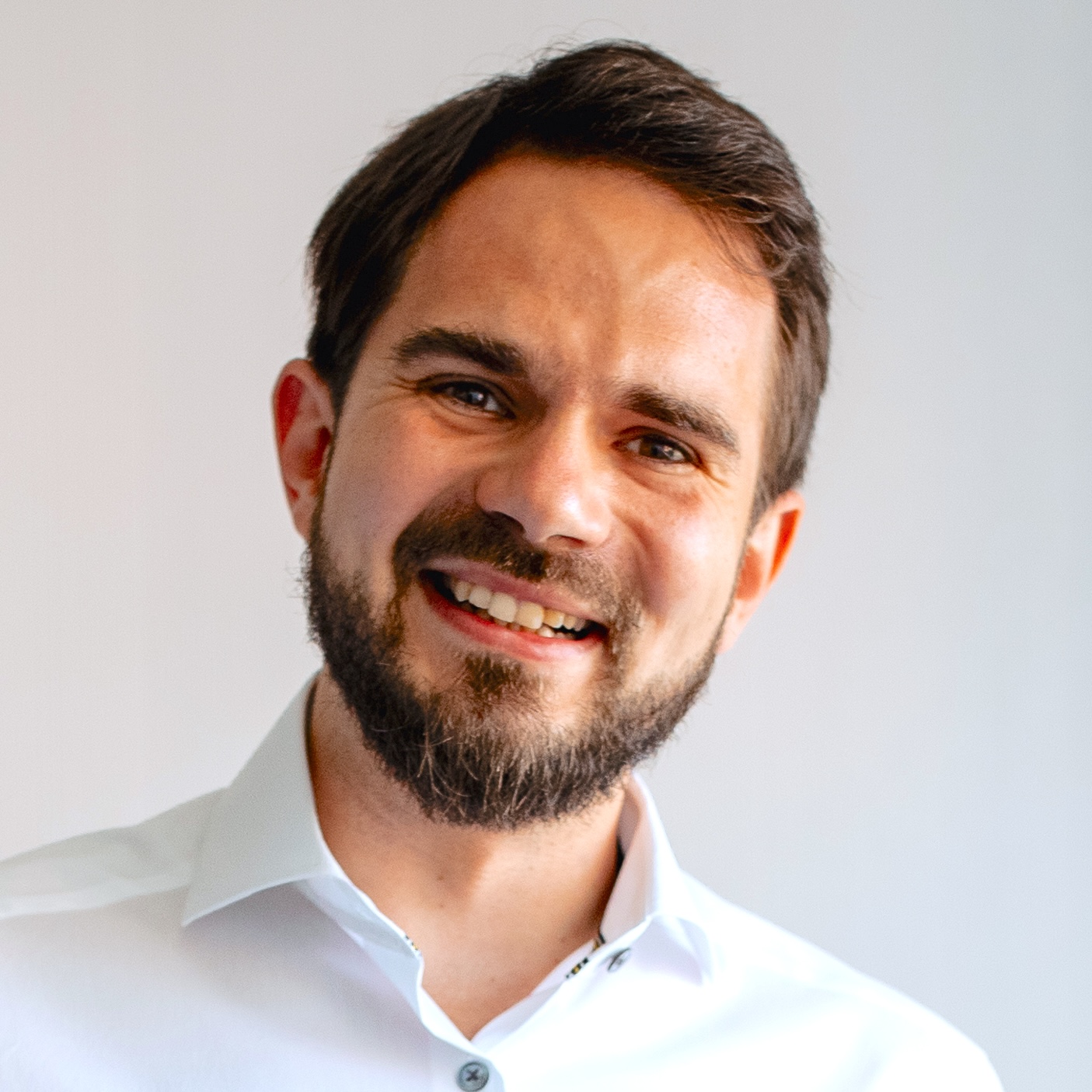
Gergo Bohner
Scientist, engineer and former deep-tech founder working at the intersection of computation, biotech and neuroscience.
I have always yearned to thoroughly understand natural and human-engineered systems, and apply this understanding towards improving the state of the art in software, hardware, operations and fundamental scientific knowledge.
My broad curiosity has led me down many-a-path, through neuroscience, biopharma manufacturing process and hardware development, healthcare ML, ERP and LIMS systems, and all kinds of embedded, distributed, backend and frontend software.
As I tend to dig into the deep technical underbellies of whatever I work on, I am able to connect quite well with true dedicated specialists of different fields, and I love translating between excellent people who otherwise struggle to understand each other, be it doctors and medical IT folks, or quality managers, biologists and mechanical engineers.
After 15 years of studying and working in England, I now live in Pamplona, northern Spain, and would love to get to know likeminded thoughtful people here or online, to continue my journey in bettering both myself, and the world.
Things I am interested in and have substantially worked on
- Biopharmaceutical manufacturing process and hardware development, from genetic engineering, through cell culture and bioreactor systems, downstream purification methods (TFF, chromatography) to lab-based QC and cGMP-grade software traceability of all materials, samples and operations. First, I designed and built a small robotic lab alone, and then with a larger team we made our own stainless manufacturing skids from scratch for all unit operations, and patented some aseptic fluid handling innovations in the process.
At my former biotech startup, Trisk Bio, which raised $10M+ funding with rounds led by the Altman brothers' moonshot competition, and then the deep tech specialist Matrix VC firm.
- Preventative medicine, via modelling all Scottish patient data to assess risk of hospital admission, distributing the monthly risk scores to all GPs (family doctors in the UK) and enabling them to prioritise their time and intervene with medication changes, screening or focused blood tests before high-likelihood adverse events. An interesting practical and theoretical challenge was dealing with these interventions altering the observed data, called performative prediction effects.
My machine learning and project management contribution to the Scottish NHS SPARRA programme.
- Tractable computational models of neural representations of sensory processing and behavioural planning, via inferring latent non-linear population dynamics. I implemented this as an end-to-end computational pipeline, using structured Gaussian processes and variational inference in a physically grounded generative model to extract neural signals from TBs of microscopy video data from behaving animals.
My PhD at Gatsby Unit, UCL.
- Epidemiological modelling in early COVID, and influencing UK testing policy. I was in a fantastic position to help when the pandemic started, and so I felt compelled to do so. I was working in a Cambridge RNA lab, from where the military took our RT-qPCR machines for centralised testing hubs, and this was less than a year after I left my NHS data science work. I wanted to computationally evaluate the theory that antigen lateral flow tests may be a major asset in addition to the more precise, but less scalable PCR testing. Thanks to my NHS connections, I was able to assemble all data and help quickly, and helpful AWS contacts offered limitless free cloud compute. In only 4 weeks, I was able to define the extended SEIR model, wrangle all the data, do a large-scale Bayesian parameter search of simulated scenarios, and co-write a policy paper with the help of health policy experts to summarise the results. This paper was presented to a UK SAGE meeting, and shortly after discussed directly with Sir Patrick Vallance, eventually helping the mass adoption of lateral flow testing in the UK.
See the policy white paper, and the code.
Some smaller side projects I have done
- My wife and I love maps, and so I made a Tolkien-style fantasy map of our honeymoon travels, learning to obtain and process spatial data, using PostGIS for computation (for eg the typical buffered water-lines), Mapnik for highly detailed rendering, and even post-processing the prints via accelerated aging methods involving whisky and fire.
- I made our own giant photoscreen and information board, gutting an old large IPS monitor, sticking a raspberry pi to its back, framing it nicely, and adding software starting from the excellent MagicMirror project, but having to write my own Dropbox connector to correctly handle the API access and randomisation for the many thousands of pictures we have.
- I develop simple websites every few years since the early 2000s for others or myself, catching up with the current fad of content management, front-end and hosting systems.
- To learn about the capabilities and limitations of agentic AI, in early 2025, soon after MCP came out I have put together an agentic ERP consultant system, that connects directly to Odoo data- and codebases, and is able to do quite a lot of the work as typical functional consultants and developers do, such as translating natural-language user requirements to database schema and view changes, or adding new business logic. It has taught me a lot about ways of AI safeguarding and off-channel verification / rollback; as well as the general quickly-evolving AI-SaaS ecosystem. I loved learning and choosing tools that fit my desired level of technical control, such as using the then-brand-new pydantic-graph for multi-agent coordination, or finding a lovely way to charge exact pay-as-you-go to users via passing my Openrouter costs to Stripe events and pre-paid subscriptions (admittedly a questionable business model even with a slight markup, but concerningly a fun and general-purpose integration problem).
Other things I am interested in and have thought about
- The theory of evolution and the (relative lack of) separation of scales between physics, geology, biochemistry, cell and whole-organism biology, up to whole ecosystems. I recommend this excellent book that I have read through 3 times now and am still trying to fully understand and internalise: The Origin and Nature of Life on Earth: The Emergence of the Fourth Geosphere
- I am particularly interested in how to represent theories and models of multi-scale or highly complex systems, in a useful (i.e. predictive and/or computationally tractable) way, but I do not have a very clear answer yet.
- On this, I actually published a theory and computational model with examples of how biological systems may use their overparametrised "sloppy" state spaces for adaptation and evolution. This involved implementing Mark Transtrum's Manifold Boundary Approximation Method as a symbolic-numerical Julia algorithm, iterating geodesic ODE solver and symbolic model reduction steps. It was interesting, but far from a general solution!
- Developmental neuroscience, the theory of learning, and symbolic computation. For example, I am fascinated by Josh Tenenbaum's work on concept learning via probabilistic program induction, and Alison Gopnik's Hierarchical Bayesian causal learning framework on how children actively learn about the world.
- Systems engineering, requirements management, and business processes, with formally verifiable knowledge and process representation
- As part of my biopharma journey, I have studied the new SysML v2 framework for hardware development, and tried various process modelling and simulation frameworks, including heavyweights such as BPMN-Camunda and AnyLogic. A great tool I made for assisting quick design iteration with formal verification was a custom state machine simulation I wrote on top of our P&IDs made in Capital Electra, and we developed a strongly typed Rust production system for the actual hardware.
- More recently, I have been thinking of utilising proper ontologies and automated reasoners as a symbolic logic layer behind LLMs. One could also use AI tools to map existing scientific knowledge or business processes into such systems, carry out the symbolic logic computation within, and translate the verifiable results back to human language once again.
If you'd like to reach out to have a deep conversation about any of the above, or you think that we could work together on something interesting, then please write me at hello@gergobohner.com.
For more formal consulting enquiries, you may reach me at work@gergobohner.com.